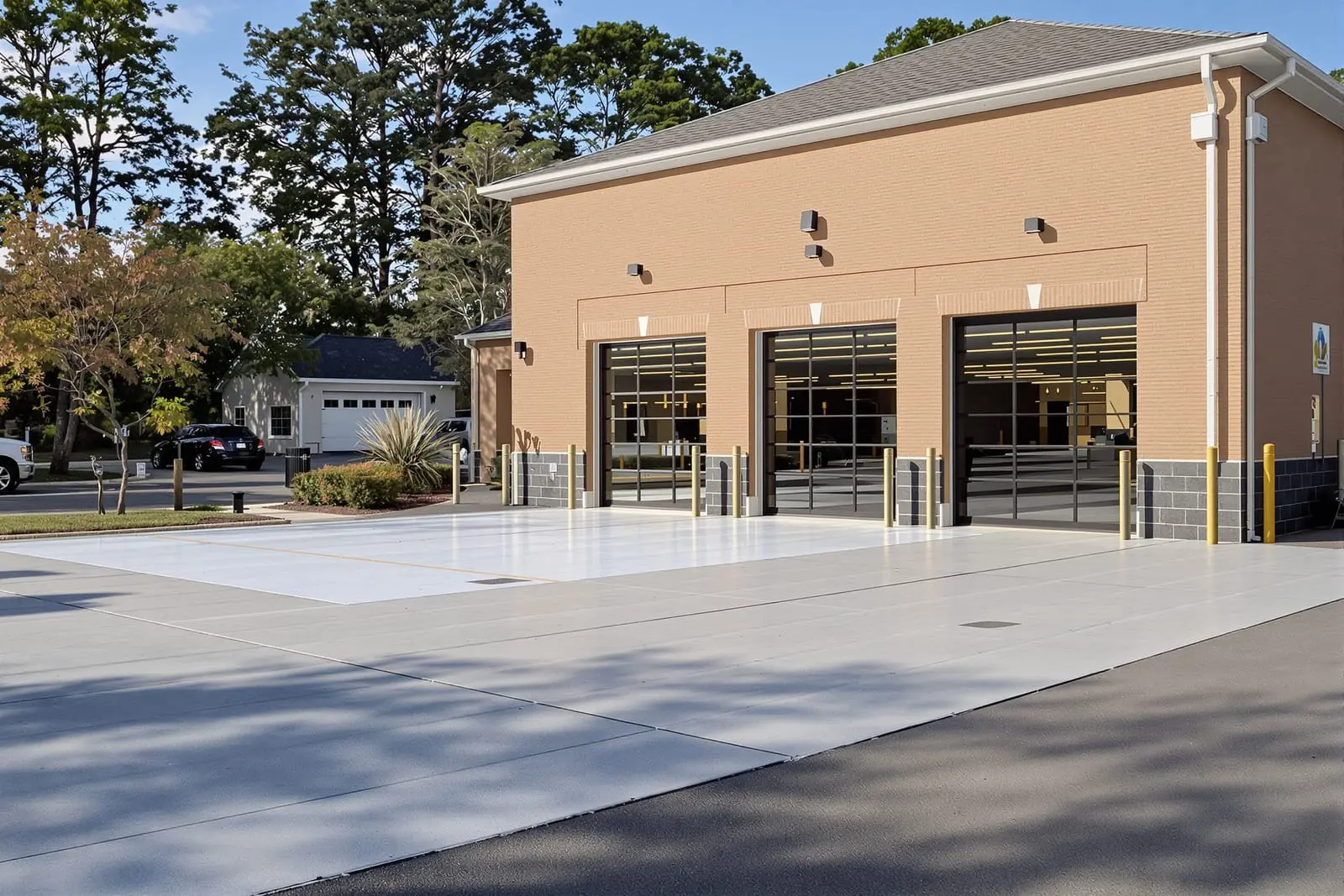
We construct commercial concrete slabs in Conway, AR for loading docks, ramps, and heavy equipment areas. Our designs use thicker sections, dowels, and reinforcement to handle truck traffic and point loads. Keep your logistics operations safe and efficient with properly built dock and slab systems.
Primetime Concrete Conway provides professional commercial concrete slab throughout Conway, AR and the surrounding area. Our licensed, insured crew delivers safe, clean, on-time work with a free estimate before anything begins. Call (806) 513-3678 or request your free quote.
Commercial concrete slab work built for Conway businesses
Primetime Concrete Conway pours commercial concrete slabs and loading docks that are built for real, everyday use in Conway, not just for a set of plans on paper. Whether you are running a warehouse off I-40, a retail space along Oak Street, or a light industrial shop outside city limits, we design the slab around what you actually do: how heavy your forklifts are, where trucks sit and turn, and how often those doors roll up and down.
Most calls we get for commercial concrete slab work in Conway fall into a few groups: new construction slabs under metal buildings, thickened slabs for equipment pads, and loading dock slabs that tie into existing structures. We look at soil conditions, drainage patterns on your lot, and the loads you expect, then size slab thickness, reinforcement, and concrete strength to match. Our goal is simple: a slab that does not crack badly, does not settle in wheel paths, and does not collect water where people are trying to work.
Instead of giving a one-size-fits-all price over the phone, we usually walk the site. That lets us spot issues like soft fill dirt from an old building, poor drainage toward your foundation, or utility lines that will affect the slab. From there we can give you a clear scope and price, explain what is included, and schedule the work around your business hours as much as possible.
How we build durable loading docks and approach design
A good loading dock in Conway has to deal with hot summers, freeze-thaw in winter, and trucks that often back in off uneven gravel or older asphalt. Primetime Concrete Conway starts with layout and grades. We set elevations so trailer beds line up with your dock height, then pitch the apron slab slightly away from the building so rainwater flows out, not back toward your doors.
Once layout is set, we excavate to the proper depth, usually 8 to 18 inches depending on the dock type and soil. Soft or pumping soils get undercut and replaced with compacted gravel base. We compact in thin lifts using plate tampers or rollers until a probe test tells us the base is tight. Skipping this step is one of the main reasons you see dipped wheel paths in front of older docks.
For the slab itself, dock aprons and truck lanes normally use a higher strength concrete mix and extra thickness. A light retail dock that sees box trucks might use a 6 inch slab with rebar grid, while a distribution dock with regular 18 wheelers can run 8 inches or more with heavier reinforcement. At dock doors we often add thickened sections where trailer landing gear or lift gate wheels sit, since those point loads are what punch through weak concrete first.
We also discuss features that actually help your crew: broom or tined finishes for traction, edge protection where wheel bumpers hit, and properly sized, sealed joints so the slab can move a little without random cracking. If you are dealing with older asphalt or a mismatched existing slab, we look at transition details so forklifts roll smoothly without catching a tire on an edge.
Commercial concrete slab options, finishes, and reinforcement
Commercial concrete slabs in Conway are not all the same. Primetime Concrete Conway walks you through the choices that matter, depending on whether you are storing pallets, parking heavy trucks, or installing machinery. For interior slabs under metal buildings, thickness can range from 4 inches for light storage up to 8 inches or more under racking and equipment. Most small to mid-size projects use a 5 or 6 inch slab with rebar or wire mesh, but we size reinforcement to your actual loads and column layout.
We work with different reinforcement systems: traditional #4 or #5 rebar grids, welded wire mesh, and in some cases fiber-reinforced concrete for added crack control. Rebar gives better control where forklifts turn repeatedly or where heavy shelving legs sit in specific spots. Fibers can help with surface durability in shops that see a lot of foot traffic and carts. We explain where each option makes sense instead of just upselling steel everywhere.
Finish type is another key decision. For interior commercial slabs we can provide a hard-troweled finish that is smooth and easy to keep clean, a lightly broomed finish if you want more traction in wet areas, or a trowel-and-sawcut finish designed with specific rack and drain layouts. For exterior slabs and dock aprons a rougher broom or tined finish is standard so tires get grip even in rain.
We also talk about coatings and sealers. Some Conway shop owners choose clear sealers for dust control and easier cleanup, especially in automotive and fabrication spaces. Others plan to install epoxy or polished concrete later. In those cases we pour and finish the slab to meet the flatness and surface prep standards those products require, which saves you grinding and repair work down the road.
What affects the cost and timeline of a commercial slab project
Business owners usually want to know what drives the price of a commercial concrete slab. With Primetime Concrete Conway, the main cost factors are slab thickness, reinforcement type, site conditions, and access for equipment. A 6 inch reinforced slab over good native soil is less expensive than an 8 inch slab on imported base rock, and a simple rectangle is faster to form than a slab with lots of cutouts and thickened edges.
Soil and subgrade play a big role in Conway, especially on lots that have been built on before or filled in. If we find deep soft spots, old buried debris, or standing water issues, fixing those adds time and material but saves you from slab failure. We are upfront when we hit these surprises and explain your options, such as undercut and replacement, thicker base rock, or in some cases a thicker slab section in problem areas.
Access and scheduling matter too. If we can reach your pour area with a truck and laser screed, work goes quicker and costs less. Tight back lots, interior pours in existing buildings, or night and weekend work to keep you open can add labor cost. We try to plan pours around your busiest times so your dock or shop can stay functional.
Timeline depends on weather and project size. Most commercial slabs and loading dock aprons in Conway pour in one or two days, with prep taking another day or two. Heavy-duty slabs or multi-pour projects take longer. After concrete is placed, we usually recommend keeping heavy vehicles off for at least 7 days, even though foot traffic and light use can begin sooner. We will give you a realistic schedule so you can plan deliveries, inventory moves, and staffing.
Common loading dock and slab problems we prevent and repair
Because we work in and around Conway every day, we see the same failures over and over: dock aprons that have settled several inches at the truck wheels, slabs that collect water at door thresholds, and interior concrete that has cracked badly under racking or machines. Primetime Concrete Conway designs to avoid these issues from the start, and we also repair or replace damaged sections when needed.
Settlement at loading docks usually comes from poor base preparation or water washing out material along the slab edge. We counter that with proper excavation, compacted granular base, and attention to drainage away from the slab. Where docks meet existing asphalt or older concrete we tie new work into the stable areas with doweled joints and thicker edge sections, which reduces the chance of the new apron breaking off at the seam.
Random cracking and surface scaling are other common complaints. To reduce these problems we use the right mix design for the season, place control joints at proper spacing for the slab thickness, and sawcut them at the right time so cracks follow the joint lines. We also adjust finishing practices to the weather. On hot Conway summer days we plan earlier pours, use curing compounds, and keep an eye on wind and sun so the surface does not dry too fast and start to craze or flake.
If you already have a failing commercial concrete slab, we can evaluate whether partial replacement, full replacement, or an overlay is the best move. Sometimes cutting out and repouring the failed truck lane or dock face solves the issue without shutting down your whole operation. In other cases, especially where the base is compromised across a wide area, a full rebuild is the right call. Either way, we explain what is causing the problem so you do not spend money repeating someone else’s mistake.
“
Professional loading docks & commercial slabs, done right the first time, quality materials, honest pricing, and results that last.
Primetime Concrete Conway
Loading Docks & Commercial Slabs Across Our Service Area